Optimization Fatigue
The life sucking drain of perfection

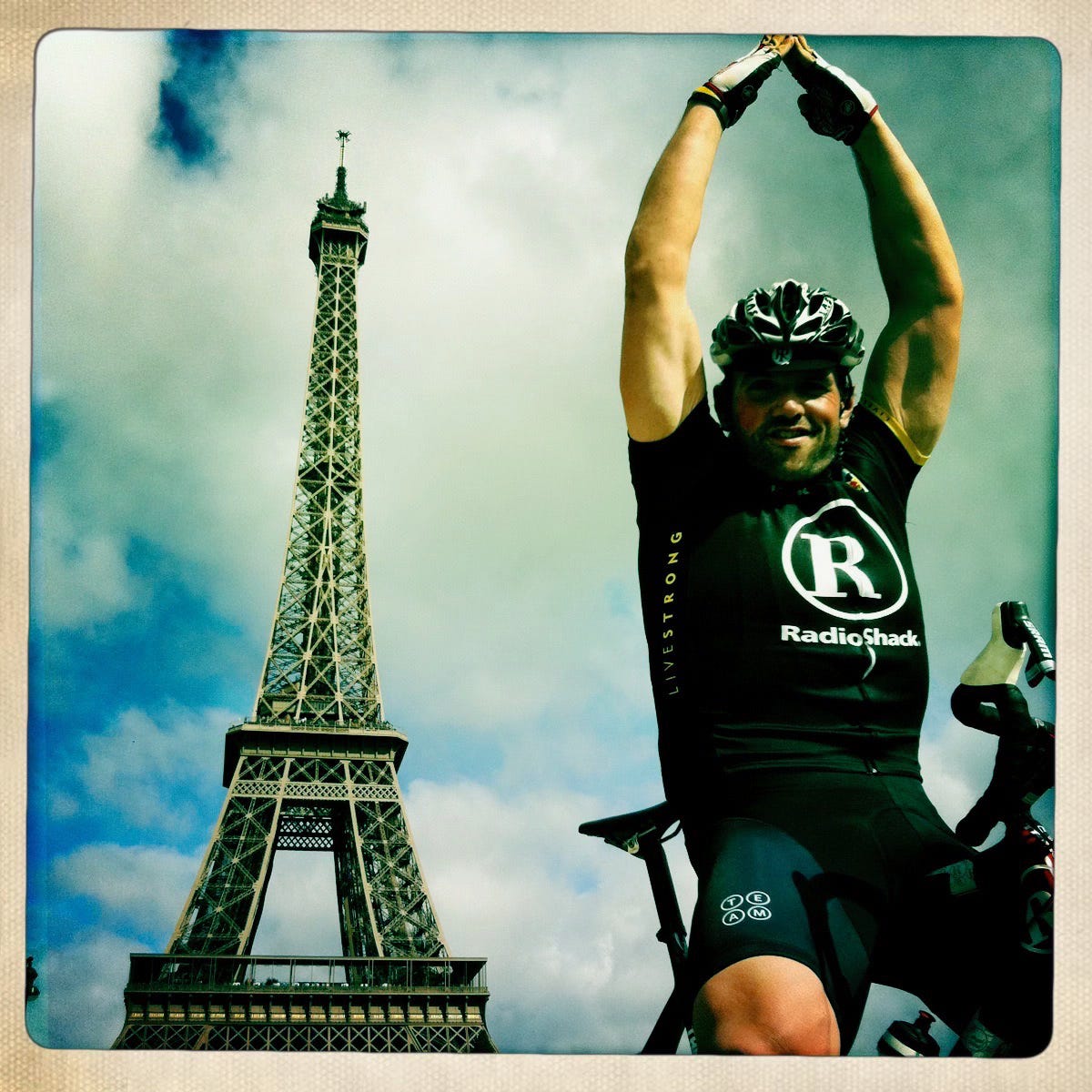
Starting up Latigo Canyon, the fog has swallowed PCH in both directions, but right here it hangs still, unbothered, untouched by the morning rush of cars that will eventually whip it into something wild. I know exactly what’s ahead: eleven miles to the summit, an average grade of 6 percent, with a few spiteful pitches closer to 8. I know this because I’ve memorized it. Every inch, curve, dip, each broken patch of asphalt is etched into my brain like choreography.
I know other things too: I need my heart rate at 135, cadence around 88, nothing heroic out of the gate. But it’s already sitting at 147 because I got jumpy on the short approach from the 76 station. Too eager, too early. Story of my life.
I downshift and sit up, eyes glued to the cadence reading on my Garmin, steady at 88, then rip open a gel because I want to maintain a 90-gram carbohydrate inflow per hour.
At some point, all that measuring rewired me. Years later, a friend in New York suggested we take CitiBikes instead of the subway or an Uber, and I was instantly hit with a wave of mental fatigue. I felt almost naked: no heart-rate monitor, no cadence or wattage, no pocket full of gels. In my old professional-amateur days, riding “naked” meant only one thing, total redline. Go all out until the tank is empty.
We were heading uptown to see a show, and I pictured what would happen if I treated this CitiBike ride the same way. Sweat-soaked clothes on a cool day. My whole body vibrating with glycogen depletion. Hands so shaky I’d have trouble docking the bike, maybe even texting for help if I collapsed. That was the whole point of a naked ride back then: 100 percent until I dropped. Which is probably how I wound up chasing perfection in the first place.
Because the truth was, I couldn’t just ride a bike for fun. I couldn’t even ride it simply to get somewhere faster than walking.
And it wasn’t just the bike. That same wiring followed me everywhere, especially once I started actively maintaining weight loss. It became an all-consuming job. Everything had to be measured and then verified by weight. I lived with my nose in a dog-eared CalorieKing book, doing endless math, counting, recounting, adding, scrapping the whole equation because I didn’t like where the numbers landed.
Undershooting was easier. If I came in low, I could tack on a protein shake, an apple, a handful of almonds. But overshooting meant undoing the entire day’s plan, which felt like taking apart a ship plank by plank. Sundays turned into mental meal-prep drills. I’d picture a day’s worth of food: boneless skinless chicken breast, half a cup of steamed broccoli, half a cup of cooked rice, that’s one meal. Then two slices of Oroweat bread cut in half so I could make two “real” sandwiches, low-fat mayo, mustard, 8 ounces of turkey, some veggies, meal two. Egg whites, turkey bacon, dry toast, meal three.
But then came the real work: running the numbers. Was the protein high enough? Fiber adequate? Was the timing right? Could I squeeze in a 0% Fage with whey and still land inside the lines? The whole operation was so exhausting it came close to collapsing more than once.
So, in order to justify my ideas about protein timing, I did what any irrational obsessive might do: I decided to become a bodybuilder. Not in any delusional “I’m going to compete” way, but in the sense that I made it my identity, the thing that pushed me forward. And honestly, obsessing over food fit perfectly with that.
Progressive Overload became the new paradigm. Week one was the hardest—not because the weights were heavy, but because I had to hold back, save room to build. Each week climbed a little higher until week 6, when I finally got to bury myself in muscle failure on every lift.
Chest and triceps on Monday, back and biceps Tuesday, legs Wednesday, then the whole cycle again Thursday through Saturday. I was so devoted that getting to the gym for at least two and a half hours a day outranked nearly everything else.
When the pandemic hit, that devotion mutated into something feral. I found a speakeasy gym in L.A. that you could only enter by being buzzed through multiple locked gates. It was raided more than once while I was inside. Me and a handful of other sickos desperate for a pump would sprint out the back gate as the cops tried to break in through the front. Nothing says “I might have a problem” like fleeing law enforcement because you can’t skip back day.
And shockingly, this did not turn me into my ideal self. None of it did. Not the version I imagined waking up as, once I’d hit all my goals. And none of it was remotely sustainable. The minute I had to go to work and couldn’t ride my bike for hours every day, the whole scheme went up in smoke. There’s nothing like a little time off to make getting back into it feel like scaling Everest.
The calorie and macro tracking was just as brutal. My wife had to stop me more than once from bringing a food scale to a restaurant. It was exhausting, I was exhausting. And for what? I don’t need more muscle. My last DEXA scan had me at 224 pounds of lean tissue. That’s a lot of lean tissue. My knees don’t want any more lean tissue. I don’t walk around feeling weak, thinking that if I could only add a centimeter to my biceps or slap another plate on my bench, life would finally click into place.
So what do I want? What do I really want? I want to be as healthy as I can be. I want full use of my body, so I can spend real time with my wife, my kids, my friends, the people I work with. So I can be of some actual use in the world. I want to walk my dog without feeling burdened or wiped out. And I want to know, quietly, that I’m not slacking, that I’m still trying to improve myself, even in small ways.
Here’s what I’ve learned: cardio is good for me. If I do some of it, I feel better, I sleep better, my heart works better. I can ride a bike just because it’s FUN! Lifting some weights makes me feel immediately, physically better. And having a basic understanding of calories and macronutrients is useful in everyday life, handy, not obsessive.
For me, a life of harmony means something simple: whatever “optimization” I do has to be spread out, not piled into one corner of my life until it buckles. Broader, gentler, sane.
I don’t think I’ll ever be free of the impulse to optimize, the desire for perfection. It’s wired into me like a reflex.
But I’m learning that the trick isn’t to kill the impulse, it’s to tame it. To let it live in the background instead of running the whole show. If I can ride my bike without needing perfect numbers, eat without a calculator, lift without a six-week plan, and still feel like I’m moving forward, that’s enough.
That’s the version of me I was chasing all along.